

When summer temperatures rise and you can’t escape to the seaside or the mountains, think of urban forests. To find a little relief even in the city.
It is becoming increasingly common for heatwaves to reach tropical temperatures, especially here in cities. It is almost hard to leave the house, even for the simplest errands or to get to work. We know not everyone has the chance to head to the sea or the mountains for a bit of relief. “Hey, I’m off for a swim.” “We don’t even need air conditioning here!” — friends write on WhatsApp and the urge to get away grows. But where can we go without covering kilometres and kilometres, or spending hours in traffic? There is a solution, and it is closer than you think!
To beat the heat in the city, let’s choose parks and urban forests
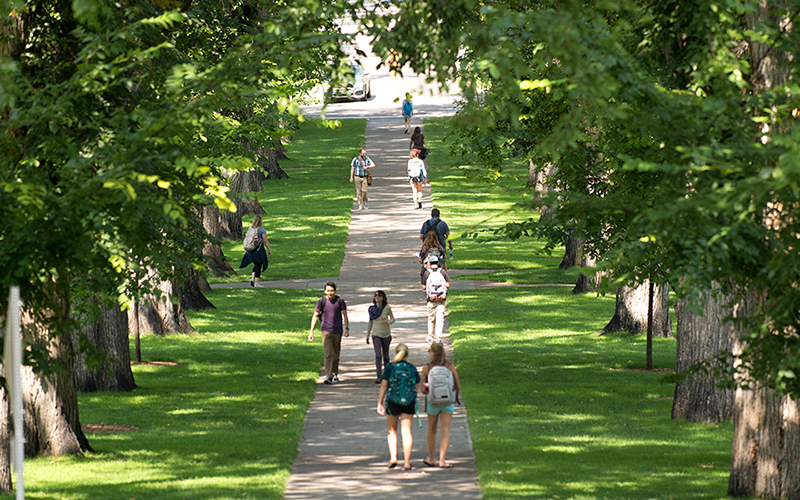
The green areas of our cities come to our aid. Parks and urban forests can bring a little coolness on the hottest days. Take notice: sometimes you only need to step into a woodland and the temperature immediately drops a few degrees and becomes bearable. Tree canopies can be a very effective weapon against heatwaves.
Trees also offer a surprisingly high number of other benefits: they reduce the risk of flooding, increase the capture of CO₂ and other air pollutants, provide shelter for wildlife, and give us spaces to exercise and stay in shape.
The urban heat island effect
In summer, cities generate an effect that makes them significantly hotter than the surrounding areas. Why does this phenomenon occur, and how can nature help us live better and create cooler zones?
The mechanism is fairly straightforward to explain: roads, car parks, rooftops and building facades are impermeable surfaces that absorb solar heat during the day and release it slowly at night, preventing the city from “cooling down” as it should. Added to all this is the heat produced by cars, air conditioning systems and industrial activity. The result? An urban centre can end up being as much as 3–5°C warmer than the surrounding countryside. This is what is known as the Urban Heat Island effect.
If you live in a large city, you have probably already experienced it firsthand: stepping out to the suburbs or reaching a tree-lined park brings immediate, almost surprising relief.
How trees actually lower the temperature
Nature’s response to this problem is effective. Trees act on two fronts simultaneously:
Shade. Tree canopies intercept direct solar radiation, preventing it from reaching tarmac and concrete. A tree-lined street can have a ground-level surface significantly cooler than a street with no greenery.L’ombra.
Evapotranspiration. This is perhaps the least well-known mechanism, but the most powerful. Plants absorb water from the soil and release it as vapour through their leaves. This process consumes thermal energy, concretely lowering the temperature of the surrounding air. A single mature tree can “evaporate” several hundred litres of water on a hot summer’s day: a natural, silent and free cooling effect.
In practice, a well-structured urban forest works like a biological open-air air conditioner.
Not all green spaces are equal
A word of caution, however: not every green area has the same cooling effect. A closely mown lawn in direct sunlight is certainly better than concrete, but it cannot compete with a real woodland. What makes the difference is the density of the canopy, the variety of species and the presence of overlapping vegetation layers — trees, shrubs, grasses — which together create a genuinely different microclimate.
The most effective urban forests are those designed using a scientific approach, selecting species suited to the local climate and the function they are meant to perform: shade, rainwater absorption, air quality improvement, wildlife shelter. This is no coincidence: it is forestry planning.
Where to find an urban forest near you
Many Italian cities are investing in the creation of new urban woodland areas and in the regeneration of existing parks. Some places are already well equipped, with nature trails, picnic areas and shaded rest spots. It is worth doing a little research: you might discover that just a few minutes from home there is already a naturally cool corner waiting for you.
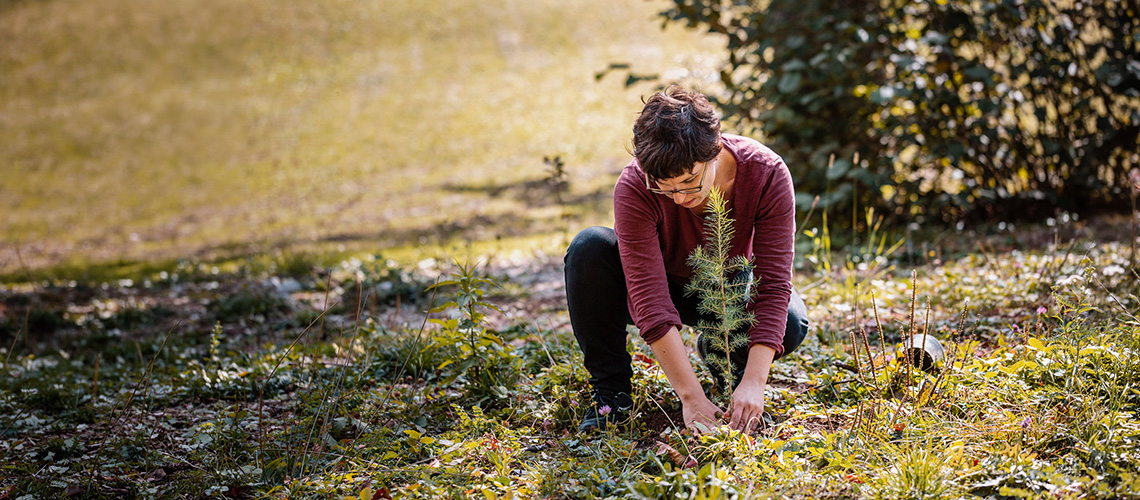
If instead you want to actively contribute to growing new forests near your cities — or to supporting those that already exist — on wownature.eu you will find concrete projects, overseen with scientific rigour, in which it is possible to take part directly.
The future of cities is green
Summer heatwaves are not a passing phenomenon: climate data tells us they will become increasingly frequent and intense. Cities that are already equipping themselves with green infrastructure — urban forests, tree-lined avenues, green roofs and walls — are making a smart adaptive choice. Not only for people’s wellbeing, but also for biodiversity, air quality and water management.